Understanding 3D Printing at a Basic Level
At its core, 3D printing is a process that turns a digital design into a physical object. Instead of traditional manufacturing methods that remove material, 3D printing adds material precisely where it is needed. This approach reduces waste and allows for shapes that would be difficult or impossible to make using conventional techniques.
The process begins with a digital file, usually created using computer-aided design software or scanned from a real object. That file tells the printer exactly where to place material, layer by layer, until the final object takes shape.
From Digital Model to Physical Object
Each object produced with a 3D printer begins as a computer-based design file. This file specifies the shape, size, and internal layout of the item, including fine surface features. Before the printing process starts, dedicated software divides the design into many thin cross-sections that represent individual layers.
These layers guide the printer step by step. By following them in order, the machine deposits or solidifies material gradually, forming the finished object from the base upward with controlled precision.
Additive Manufacturing Explained
3D printing is often referred to as additive manufacturing because it adds material rather than removing it. This contrasts with machining or milling, where excess material is cut away.
Because material is only placed where required, additive manufacturing can be more efficient. It also allows for internal cavities, complex geometries, and lightweight structures that maintain strength.
The Main Technologies Used in Main Technologies
There is no single type of 3D printing. Different technologies exist to handle different materials, sizes, and levels of precision. Each method follows the same general principle but uses its own way of forming layers.
Choosing a technology depends on factors such as cost, durability, surface finish, and production speed. Understanding the main types helps clarify how flexible 3D printing can be.
Fused Deposition Modeling (FDM)
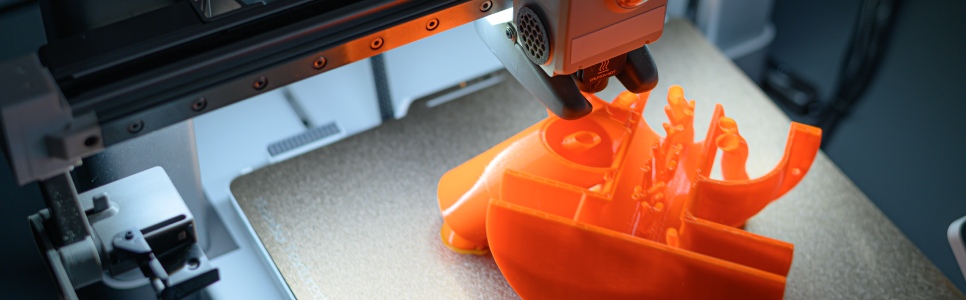
Fused deposition modeling is one of the most common and accessible forms of 3D printing. It works by heating a plastic filament and extruding it through a nozzle, which moves according to the design instructions.
The plastic cools and hardens almost immediately after being placed. FDM printers are widely used for prototyping, education, and hobby projects because they are affordable and easy to operate.
Stereolithography (SLA)
SLA printers use liquid resin instead of solid filament. A light source cures the resin layer by layer, turning it from liquid to solid with high precision.
This method is known for producing smooth surfaces and fine details. It is often used in dentistry, jewelry design, and medical modeling, where accuracy is critical.
Select Laser Sintering (SLS)
SLS printers work by using a laser to fuse powdered material, such as nylon, into solid layers. The surrounding powder supports the object during printing, allowing complex shapes without added supports.
This technology is commonly used in industrial settings because it produces strong, functional parts suitable for real-world use.
Materials Commonly Used in 3D Printing
The materials used in 3D printing vary widely depending on the printer and application. While plastics are the most familiar option, many other materials are now used to create durable and specialized parts.
Material choice affects strength, flexibility, appearance, and heat resistance. As material science advances, the range of printable options continues to expand.
Plastics and Polymers
Plastics such as PLA and ABS are popular due to their affordability and ease of use. They are commonly used for prototypes, containers, tools, and decorative objects.
Different polymers offer different properties, including flexibility, impact resistance, and temperature tolerance. This variety allows users to select materials based on practical needs.
Metals and Composites
Metal 3D printing is used in aerospace, automotive, and medical industries. Materials like stainless steel, titanium, and aluminum can be printed using advanced machines.
Composites combine plastics with materials like carbon fiber to increase strength while keeping weight low. These are often used for high-performance parts.
Specialty and Experimental Materials
Some printers can work with ceramics, biodegradable materials, or even food substances. In medical research, bioprinting uses living cells to explore tissue and organ development.
These emerging materials show how 3D printing continues to push beyond traditional manufacturing limits.
Key Steps in the 3D Printing Process
Though technologies and materials differ, most 3D printing workflows follow a similar sequence. Every step is important for ensuring a successful and optimal outcome. Understanding these steps helps explain where errors can occur and how quality is controlled during printing.
- Creating/choosing a digital 3D model
- Slicing the model into printable layers
- Setting up the printer parameters like speed, temperature, etc.
- Printing away, layer by layer
- Post-processing, cleanup, and cure
Once printed, some objects may need more work to smooth out the final product. This could mean removing supports, sanding surfaces, so that they do not look too bad, or if it is necessary, curing them under light until they gain full strength.
Where 3D Printing Is Used Today
3D printing is no longer limited to prototyping. It is now part of regular production in many fields, offering speed and customization that traditional methods struggle to match.
Its ability to produce small batches efficiently makes it especially valuable where personalization or rapid iteration is needed.
Manufacturing and Engineering
Engineers use 3D printing to test designs quickly and make adjustments without expensive tooling. Some companies also produce end-use parts directly with printers.
This flexibility reduces development time and allows faster responses to design changes.
Healthcare and Medicine
In healthcare, 3D printing is used to create prosthetics, dental devices, and surgical guides tailored to individual patients. Customization improves comfort and accuracy.
Medical professionals also use printed models to plan complex procedures before entering the operating room.
Education, Design, and Everyday Use
Schools use 3D printing to teach design thinking and engineering concepts. Designers and artists use it to experiment with form and structure.
At home, people print replacement parts, tools, and personal items, turning ideas into physical objects with minimal barriers.
How 3D Printing Is Changing Making
3D printing is an unquestionably marquee way to craft an item in a time when manufacturing is shifting focus from mass production to on-demand design, with items being spun and sprayed forth through the layers by laser and nozzle of a digital design. This process leads to more productive use of materials, faster pace and enabling production of the most elaborate designs. Understanding how this technique works will show how far it has become an extremely functional and omnipresent tool across pluridisciplinary industry sectors, and a platform for future progressiveness.